 Baikal Shore
any season
Olkhon Island and Shaman Rock
Olkhon, the largest island in Baikal, has dry steppe, pine forest, high cliffs and a famous white rock sacred to the Buryat people. Visit it with care and respect.
 CC BY 4.0, Vyacheslav Argenberg
Olkhon is windy and exposed. Strong winds can rise quickly over the Small Sea, stopping boats and the ferry; allow spare days in your plans.
Olkhon is the largest island in Lake Baikal, a long, narrow ridge of land lying close to the western shore. Its landscape changes from one end to the other: open steppe in the south, pine and larch forest along the hills, and high cliffs dropping into deep water on the eastern side. Between the island and the mainland lies a stretch of water known as the Small Sea.
For the Buryat people, Olkhon is a deeply sacred place, and many of its capes, rocks and hills carry spiritual meaning. Travel here with that in mind.
Getting to the island
A road runs north from Irkutsk through farmland and steppe to the ferry crossing at the strait called Olkhon Gate. In summer, ferries cross the strait. In winter, when the ice is thick enough and the authorities allow it, an ice road has been opened. Between those seasons, during freeze-up and break-up, crossing becomes difficult and services change.
The drive is long, and the ferry can have long queues in summer. Strong winds can suspend crossings. Build spare time into your plans. Our note on planning a Baikal trip carefully covers distances and seasons more widely.
Khuzhir
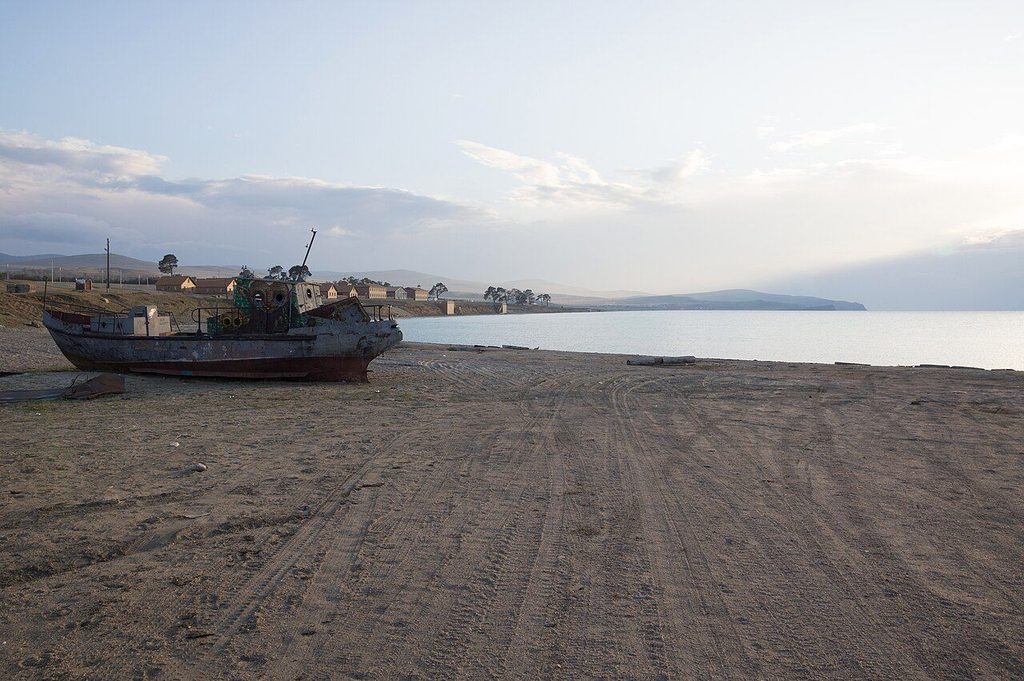
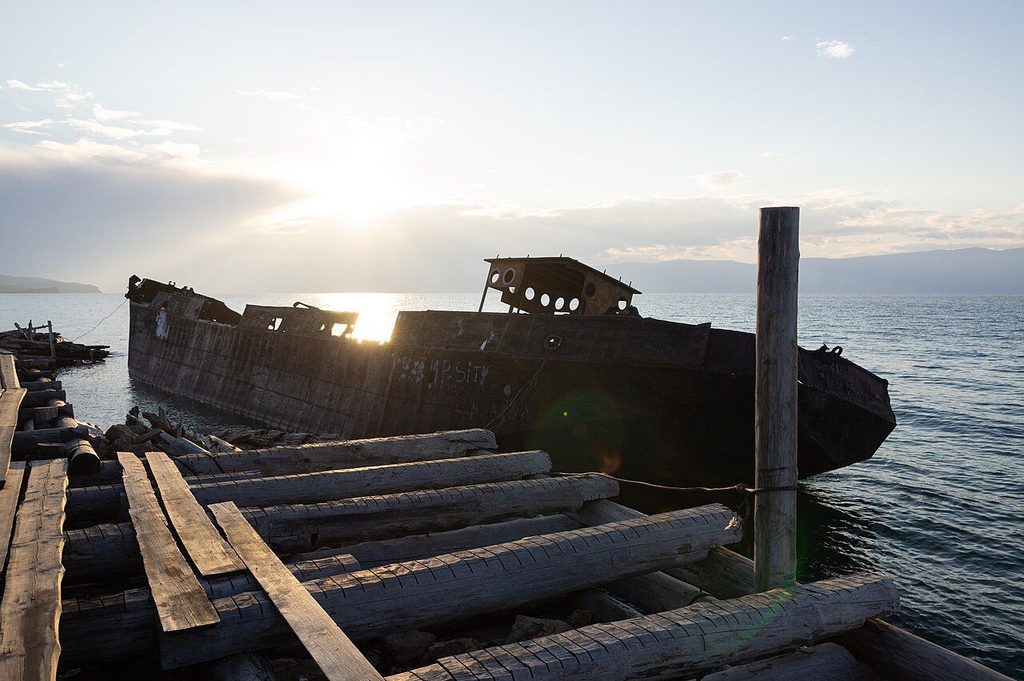
Khuzhir is the island's main village, set on a sandy bay on the western shore. It grew around fishing and a fish factory in the twentieth century; the old pier and a rusting ship in the bay still remain.
 CC BY 4.0, Vyacheslav Argenberg
The village has unpaved streets, wooden houses and a small museum about the island's history and nature. It is the base for most visitors, and in summer it becomes busy. Dust from the dirt roads hangs in the air on dry days. Out of season, the village is much quieter.
Water and resources on the island are limited, and waste is a real problem. Use water sparingly, take your rubbish with you when you leave, and keep to existing tracks rather than driving across the steppe.
Further along the shore: The nerpa and the omul
Burkhan Cape and Shaman Rock
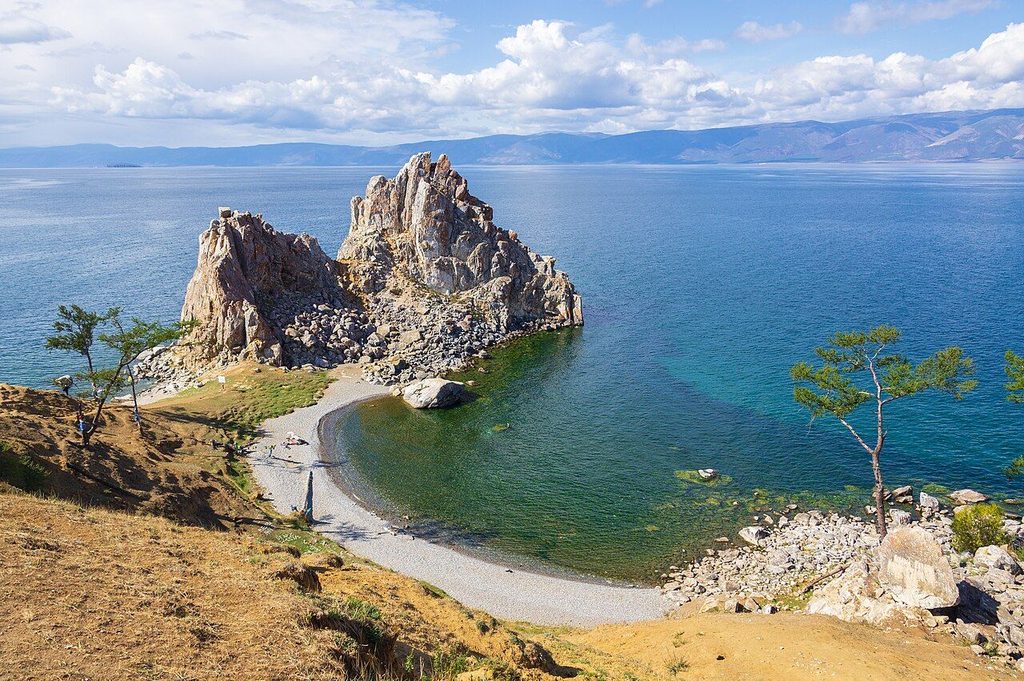
Just north of Khuzhir, a rocky cape of pale marble rises from the lake. Its double-peaked rock is known as Shaman Rock or Shamanka. In Buryat tradition, this cape is one of the most sacred places on Baikal, associated with powerful spirits. A cave runs through the rock, and in the past it was used for rituals.
Today the cape is visited by many people, and it is easy to forget its meaning. Please remember that for many people it is a living sacred place, not a backdrop:
- Do not climb the rock or enter the cave.
- Do not leave objects, coins or messages, and do not move stones.
- Speak quietly, and do not drink alcohol near the cape.
- Near the cape stand wooden posts called serge, wrapped with ribbons. They are part of local religious practice. Do not touch them or tie anything to them unless you understand the custom.
Watch the cape from the paths and the slope above. In early morning or late evening, the light on the white rock and the clear water below is very fine.
The steppe and the north
Olkhon is one of the driest places around Baikal. The southern and central parts of the island are open steppe, with grass, wild flowers in early summer and rounded hills. Further north, forest covers the higher ground, and the land rises to cliffs on the eastern shore.
At the northern tip, Cape Khoboy is a narrow, pointed headland with sheer drops to the lake. The view from there takes in the open water of Baikal stretching away to the east. The tracks to the north are rough and dusty; the trip there is long and the roads are poor.
 CC BY 4.0, Vyacheslav Argenberg
Wind and weather
The island is famous for its wind. Over the Small Sea, a strong wind known as the sarma can rise suddenly, pouring down from the mountains on the mainland. It can stop boats and make the water very rough within a short time. Keep an eye on the sky, and do not take small boats out in uncertain weather.
Summers are often sunny and dry, but nights can be cold. Bring a warm layer even in July. In winter the island is cold and windy, and the ice around it, especially in the Small Sea, is known for its clarity and hummocks; read our note on Baikal's winter ice before you go onto it.
Travelling carefully
Olkhon is part of a protected national park, and rules can apply to camping, fires and where you can drive. Fees may be charged for some areas.
The island's growing popularity has brought problems: rubbish, erosion and pressure on scarce water. Visiting calmly and lightly helps. Walk rather than drive where you can, keep to existing paths, and leave sacred places exactly as you found them.
Before Olkhon, many travellers spend time on the southern shore at Listvyanka or in the city of Irkutsk. Olkhon feels very different: open, dry and wide, with the lake all around and the white rock at its heart.
- Getting there
- Road from Irkutsk, then ferry or ice road
- Bring
- Windproof jacket, sun hat, sunscreen, water, warm layer