 Baikal Shore
winter ice
Baikal's winter ice
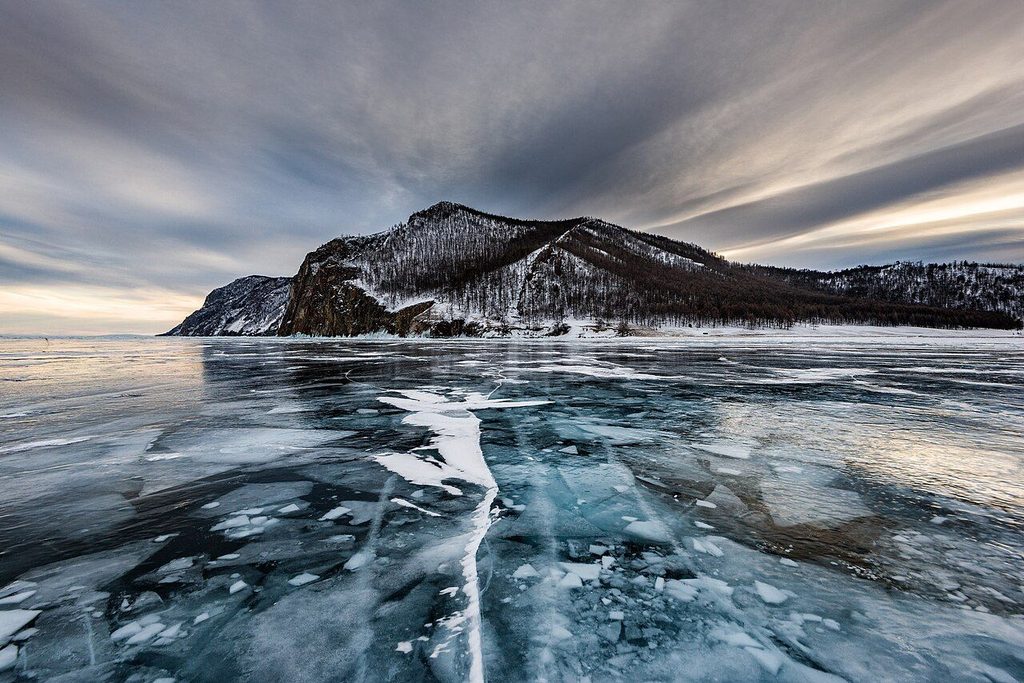
In late winter Baikal freezes into a sheet of clear, cracked ice that looks like glass. It is one of the lake's great sights, and it demands respect: ice changes, and it can kill.
 CC BY-SA 4.0, Sergey Pesterev
Never go onto the ice without local knowledge. Cracks open, thickness varies, and open water appears near river mouths and currents. Follow official warnings every day.
Lake Baikal freezes every winter. The process starts in the shallow bays and spreads across the open water, and by late winter much of the lake is covered by a single sheet of ice. Because the air is dry and the wind sweeps away snow, large parts of that ice stay clear. Looking down, you see through it to dark water below, and the cracks and bubbles inside it look like glass art.
It is a remarkable sight. It is also a natural surface on a very deep lake, with currents, cracks and changing weather. This note describes what you see on the ice and how to think about safety. It does not tell you that any particular place is safe. Only people on the spot can do that.
Clear ice
The clearest ice forms when the lake freezes on still, very cold days with little snow. The result is ice so transparent it can look black from above. On sunny days it can glow blue and green, and close up you can see fine cracks running through it.
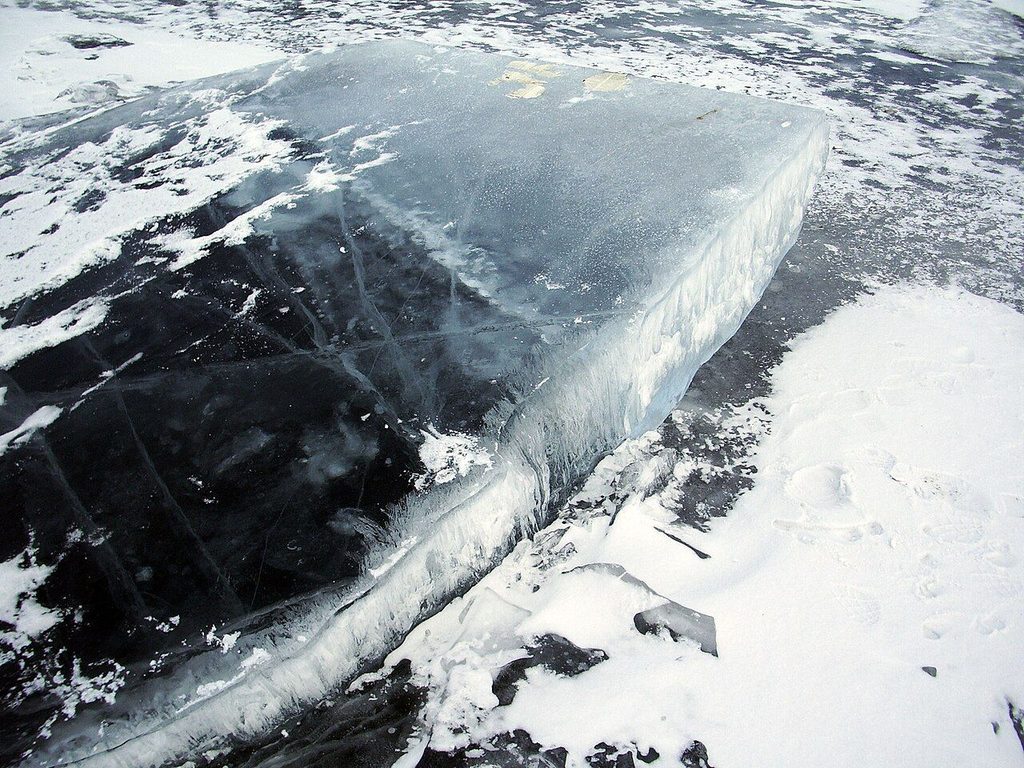
Wind is the reason the ice often stays clear. On many parts of the lake, snow is blown across the surface and piles up in drifts, leaving long stretches bare. That same wind makes the surface very slippery, and it carries the cold straight through ordinary clothing.
 CC BY 2.0, Vladislav Bezrukov from Walldorf, Germany
Bubbles, hummocks and cracks
Inside the ice you often see bubbles stacked in columns or spread like coins. Many are gas, released from the lake bed and trapped as the water froze. They make good photographs, but they are also a reminder that the lake is active below the surface.
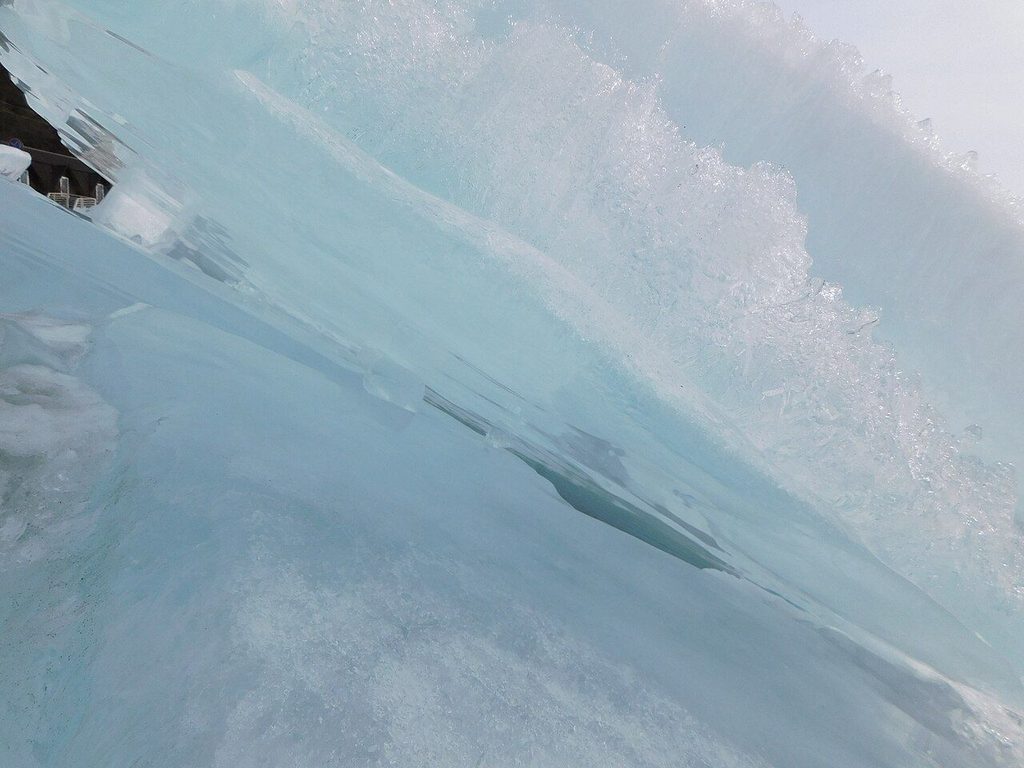
Hummocks are ridges and heaps of broken ice that form where plates of ice press against each other or against the shore. Wind and changes in temperature push the ice around, and where it buckles, slabs tilt up and shatter. Some hummocks are small; others stand taller than a person and catch the light like broken crystal.
The ice also cracks. As temperatures change, the ice expands and contracts, and long cracks open across the lake. The sound of the ice cracking, a deep boom or a long ringing groan, carries a long way and can be startling. Some large cracks reappear each winter in similar places. Others open suddenly. Cracks can be narrow enough to step over or wide enough to show open water, and they can close or open again within hours.
Further along the shore: Walking the shore: Bolshie Koty and the trail
When the ice is safe, and when it is not
There is no single answer, and anyone who offers one without local knowledge is guessing. Thickness varies from place to place and through the season. Near river mouths, springs and currents, and around the source of the Angara at Listvyanka, the ice can be thin or absent even in deep winter. Early in the season and late in the season, the ice is less reliable everywhere.
- Follow official warnings. Local authorities post notices and announce closures of ice routes. These change, sometimes daily.
- Ask people who live and work on the lake. They know where the cracks are this year, and where the ice is weak.
- Do not walk on ice you cannot see the condition of, such as ice covered by fresh snow near the shore.
- Never drive onto the ice on your own judgement. Vehicles go through the ice on Baikal, and some of those accidents are fatal.
- Stay away from cracks, from open water and from the edges of hummocks, which can hide weaker ice.
In winter, an ice road has often been opened across the strait to Olkhon, when the authorities judge the ice thick enough; our note on Olkhon Island says more. It opens and closes as conditions allow, and outside those official periods, crossing is dangerous.
Planning a Baikal trip carefully covers the wider questions about travel, seasons and current advice.
Cold and wind
The cold on Baikal is severe in deep winter, and the wind makes it worse. Frostbite can affect exposed skin quickly. Dress in layers, with a windproof outer shell, insulated boots, a hat that covers your ears, and mittens rather than gloves. Cover your face when the wind is strong.
 CC BY 4.0, Байкалочка2009
Cleats or small spikes that fit over your boots make walking on clear ice far safer; without them, a fall onto the hard surface is likely. Sunglasses help with the glare from ice and snow. Batteries drain fast in the cold, so keep spares and your phone in an inside pocket.
Days are short, and the light fades quickly in the afternoon. Plan to be off the ice well before dark.
Where people see the ice
Listvyanka is the easiest place near Irkutsk to see the frozen lake, though the ice near the Angara source is unreliable; read our note on the village at the source. Along the old railway at the southern tip, the frozen lake lies beside the line; our note on the Circum-Baikal railway covers the line itself. Olkhon and the strait known as the Small Sea are known for clear ice and hummocks, and for strong winds.
Late February and March are often the most popular weeks, when the ice is usually at its thickest and days are longer. Even then, conditions differ from year to year, and from bay to bay.
Respect the ice
Baikal's winter ice is one of the lake's most extraordinary faces. Enjoy it calmly: walk with care, stay with others, listen to local advice and follow official warnings. Stand on the shore if you are not sure. The ice will be just as beautiful seen from solid ground.
- Getting there
- Irkutsk, then Listvyanka or Olkhon by road
- Bring
- Ice cleats, warm boots, layers, windproof shell, mittens