 Baikal Shore
any season
Irkutsk, the city before the lake
Most journeys to Baikal start in Irkutsk. The city on the Angara has carved wooden houses, the story of the exiled Decembrists and a long riverside walk worth a day of your time.
 CC BY 4.0, Vyacheslav Argenberg
Irkutsk sits about seventy kilometres from the lake by road. Weather on the shore is often colder and windier than in the city, so pack a warm layer.
Irkutsk is the city on the way to the lake, and many travellers treat it as somewhere to sleep before heading out to the shore. That is a pity. The city has a long history as a trading and administrative centre in eastern Siberia, a riverside setting on the wide, fast Angara, and some of the finest surviving wooden architecture in Russia. A day or two here makes the lake easier to understand.
The city grew from a fort founded in the seventeenth century at the meeting of the Angara and the smaller Irkut river. Merchants trading with China, Mongolia and the far east of Russia built churches, stone mansions and wooden houses, and by the nineteenth century Irkutsk was one of the main cities of Siberia.
The wooden houses
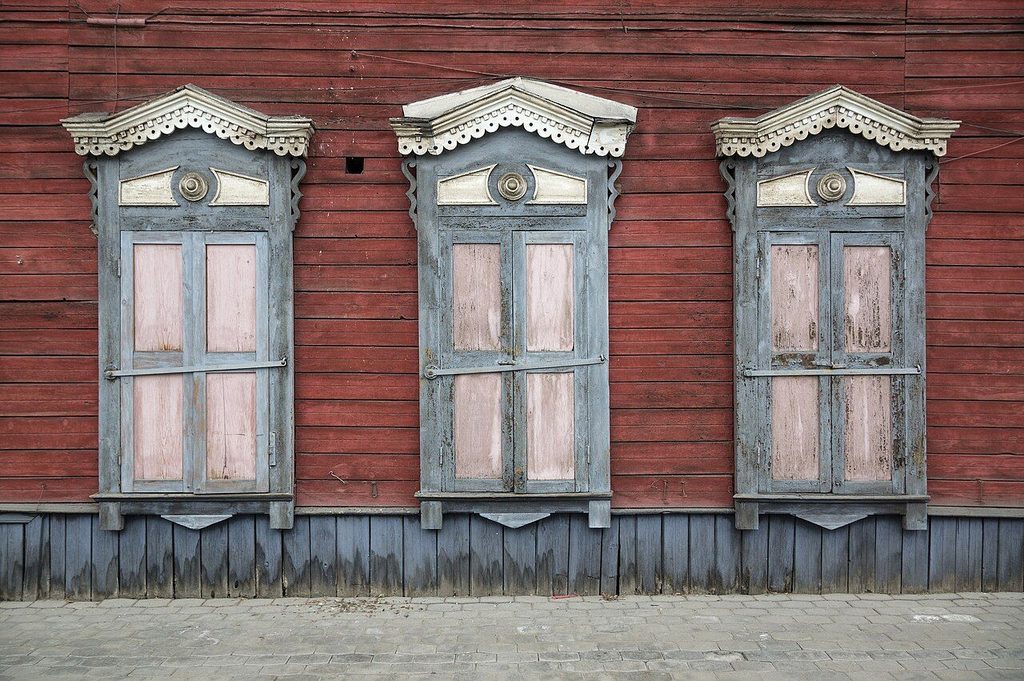
Walk a few streets back from the centre and the stone buildings give way to wooden ones. Many are log houses, some leaning with age, some carefully restored. What makes them memorable is the carving: window frames with lace-like boards above and below, shutters painted in faded colours, eaves trimmed with patterns cut by hand.
 CC BY 4.0, Vyacheslav Argenberg
These frames are called nalichniki, and in Irkutsk they range from simple to extraordinarily detailed. No two streets look quite the same. Some houses have sunk so far that their lower windows sit almost at pavement level, a result of the ground rising around them over the decades. Others have been taken apart and rebuilt on firmer foundations.
The restored district known as the 130th Quarter brings a number of rebuilt wooden houses together in a pedestrian area near the centre. It is tidy and easy to walk, and it gives you a sense of the style. The older streets around it are more uneven and more real: many of the houses are still homes, so look from the pavement, keep your voice down, and do not walk into yards.
The Decembrists in Irkutsk
In December 1825 a group of officers in St Petersburg rose against the accession of Nicholas I. The revolt failed, and many of those involved, later called the Decembrists, were sentenced to hard labour and exile in Siberia. Several of their wives chose to follow them, giving up their rank and comfort to do so.
After their sentences eased, some of the exiles settled in and around Irkutsk. The houses of the Volkonsky and Trubetskoy families have been kept as museums, and together they tell the story of the exiles and of the cultural life they brought to the city: music, schools, gardens and a steady flow of letters and books. The Volkonsky house in particular, a large wooden building with a courtyard, shows how a noble family lived far from the capital.
Further along the shore: Listvyanka, where the Angara leaves the lake
At the Znamensky Monastery, on the right bank of the Angara a little north of the centre, the grave of Ekaterina Trubetskaya lies in the churchyard. She was the first of the wives to follow her husband east. The monastery is a working religious site; dress modestly and be quiet inside the church.
The Angara embankment
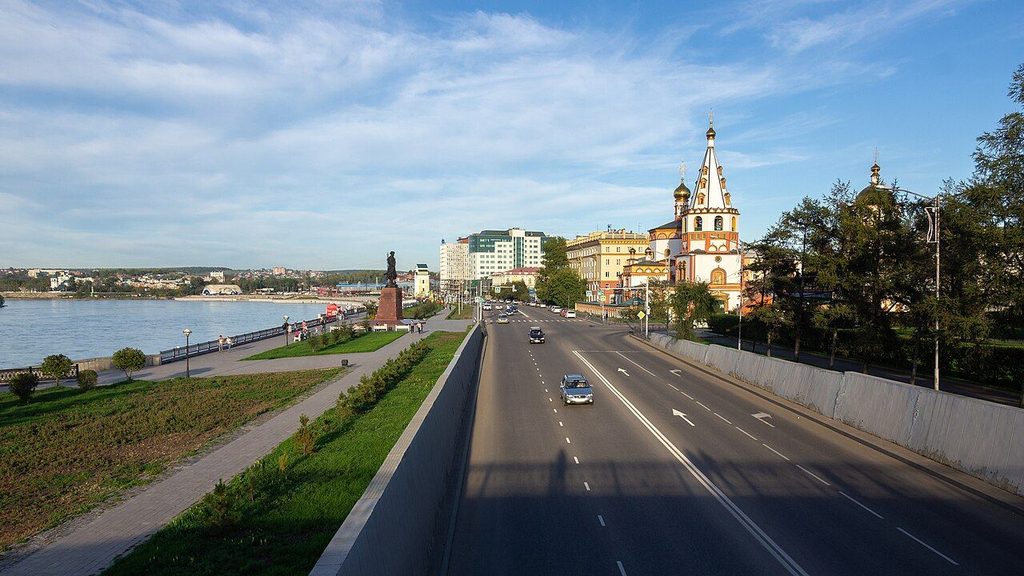
The river is the city's best feature. The embankment along the right bank makes a long walk, with views across the water and a line of trees and lawns between the road and the river. Near the old centre stands the Epiphany Cathedral, with its white walls and painted decoration, and further along you pass monuments, the old merchant quarter and stretches of open grass where people sit in summer.
The Angara here is the same water that left the lake at Listvyanka, cold and clear and moving quickly. Upstream, the Irkutsk dam holds back a long reservoir. The flow means the river near the city often stays partly open in winter, and on cold days the river steams. Do not go down to the water's edge in winter: ice along the banks can be thin and unstable.
The village at the source is worth reading about before you go out to the lake, because seeing the river leave Baikal makes the walk along the embankment here feel connected.
Markets, churches and the centre
The centre is easy to explore on foot. Look for the old trading streets with their stone shopfronts, the central market, and the scattering of churches that survived the twentieth century. Some are restored, some still show their age. The regional museums cover the natural history of the region, the history of the city and the lives of the Buryat and Evenki peoples of the area.
The city also has a lively student population and a good amount of parkland. In summer evenings, the riverside fills with people walking. In winter the city is cold and dry, often far below freezing, and the low sun makes the wooden houses glow in late afternoon.
Getting from the city to the lake
Irkutsk is the usual starting point for every part of the southern and western shore. The road to Listvyanka runs along the Angara and then through forest, about seventy kilometres. Buses and shared minibuses have run from the city to the village. A longer road heads north to the ferry crossing for Olkhon, described in our note on Olkhon Island and Shaman Rock. The Trans-Siberian railway leaves the city heading south and reaches the lake at Slyudyanka, near the southern tip.
The main railway station is on the left bank of the Angara, across the river from the old centre. For a wider view of the routes, seasons and distances, see planning a Baikal trip carefully.
- Allow at least one full day for the wooden streets, the Decembrist houses and the embankment.
- Pavements in the older districts are uneven. Wear shoes with grip, especially in winter.
- Payment cards issued outside Russia may not work.
- Be respectful in churches and around homes. Many of the wooden houses are private.
Irkutsk will not hold you as long as the lake, but it gives the lake a context: the river that drains it, the people who were sent here against their will, and the wooden city they knew.
- Getting there
- Trans-Siberian train or flight to Irkutsk
- Bring
- Comfortable shoes, light rain jacket, offline map