 Baikal Shore
summer
Walking the shore: Bolshie Koty and the trail
A coastal path runs north from Listvyanka to the small village of Bolshie Koty, over headlands and through pine forest. It is one of the finest day walks on Baikal, and needs care.
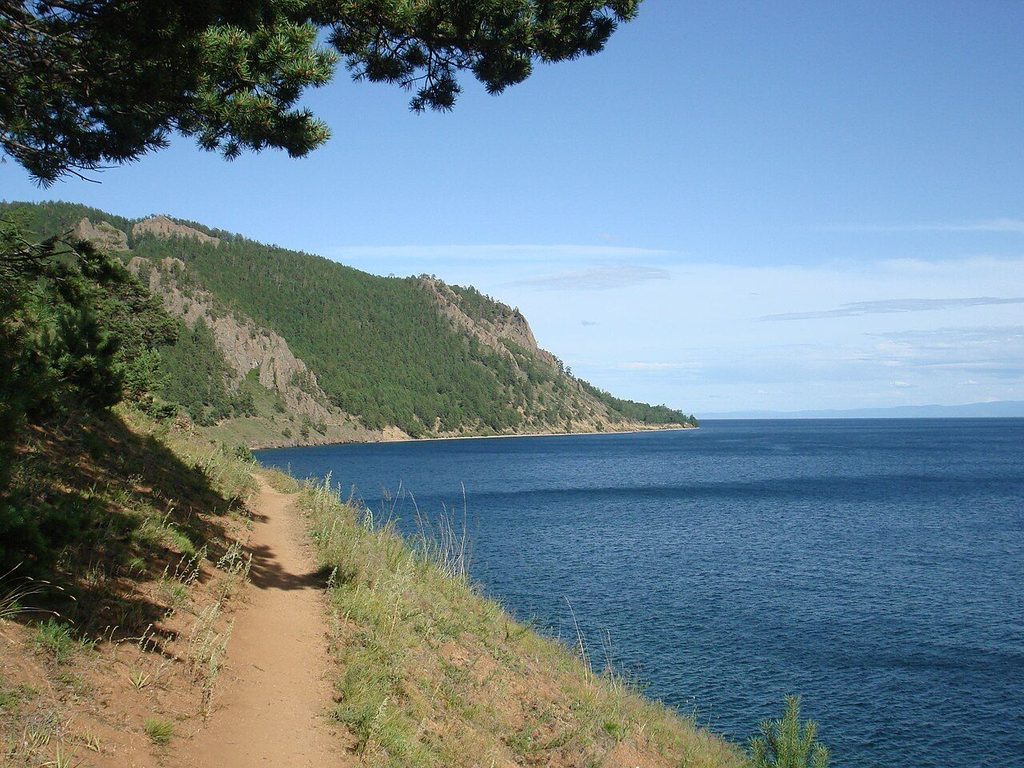 PD, Victor Alexandrov source
Ticks are most active from May into early July. Wear long sleeves and trousers, use repellent, and check yourself carefully every evening after walking.
From the end of the road in Listvyanka, a path heads north along the shore of Lake Baikal. It climbs over headlands, drops into coves, crosses scree and runs through stands of pine and larch. After most of a day's walking it reaches Bolshie Koty, a small village in a valley with no road to the outside world. It is one of the best known walks on the lake, and for good reason.
The path to Bolshie Koty
The distance is around twenty kilometres, though it feels longer, because much of it is uneven. Some stretches follow the shore on pebbles and rock, some climb onto slopes above the water, and a few are steep enough that you use your hands. The path is generally clear, and in places it has been improved with steps and markers, but it is a mountain path, not a promenade.
Views open up regularly: the lake stretching away to the east, the far shore on clear days, the water below often so clear you can see the stones on the bottom. Small beaches between headlands make good places to rest.
Walkers usually allow most of a day, starting early. In summer, boats have run between Listvyanka and Bolshie Koty, and some walkers take a boat one way and walk the other. Do not count on a phone signal along the way.
Volunteer-built trails
Much of the path work along this shore has been done by volunteers. Since the early 2000s, groups from Russia and abroad have spent summers building and repairing trails around the lake: cutting steps on steep slopes, laying boardwalk over wet ground, putting up signs and clearing fallen trees. The idea grew into a wider network of paths in several parts of the Baikal region.
The work is slow and physical, and the results are easy to take for granted when you are walking. Keep to the path where it has been built, especially on eroding slopes, so that the effort lasts. Take your rubbish with you and use existing fire places only, where fires are allowed at all.
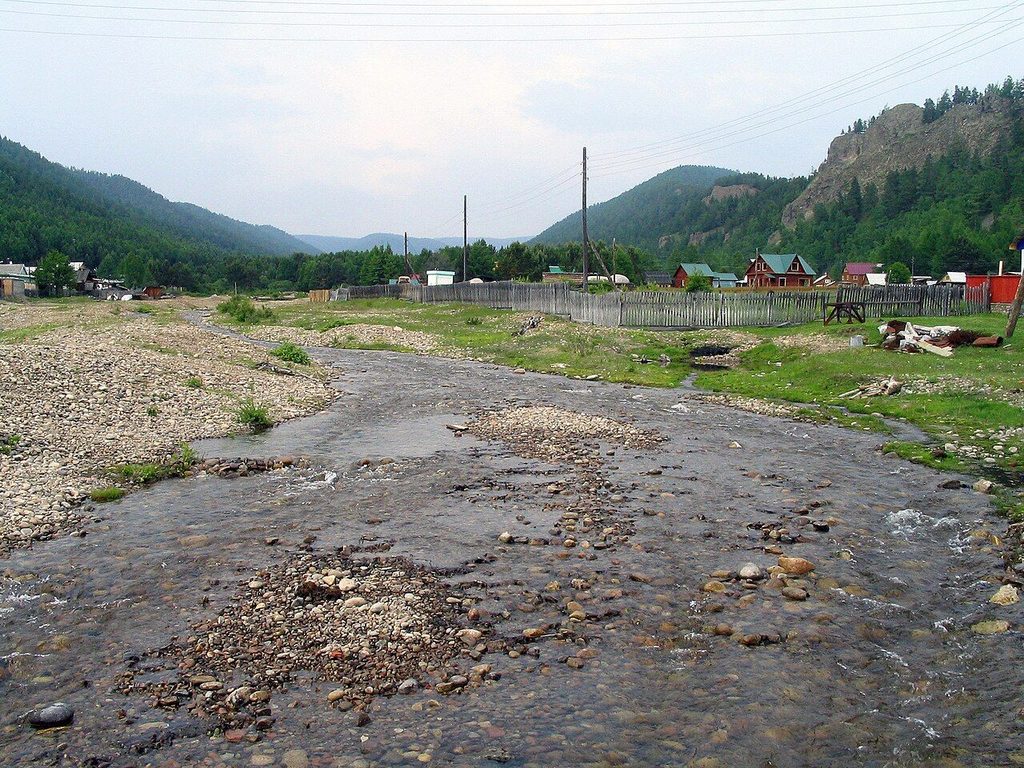 PD, InvictaHOG~commonswiki source
Bolshie Koty
The village sits where a stream comes down to the lake through a gap in the hills. Wooden houses with carved window frames line the few streets, and fences and gardens run up the valley. In the nineteenth century the area saw gold prospecting; later, a university biological station was set up here, and scientists still come to study the lake's life in the clear water off the village.
Further along the shore: The nerpa and the omul
The village has no road connection to Listvyanka or Irkutsk. In summer, people arrive by boat or on foot; in winter, when the ice is safe and only then, people travel along the frozen shore. This isolation gives the place a quiet that you notice as soon as you arrive.
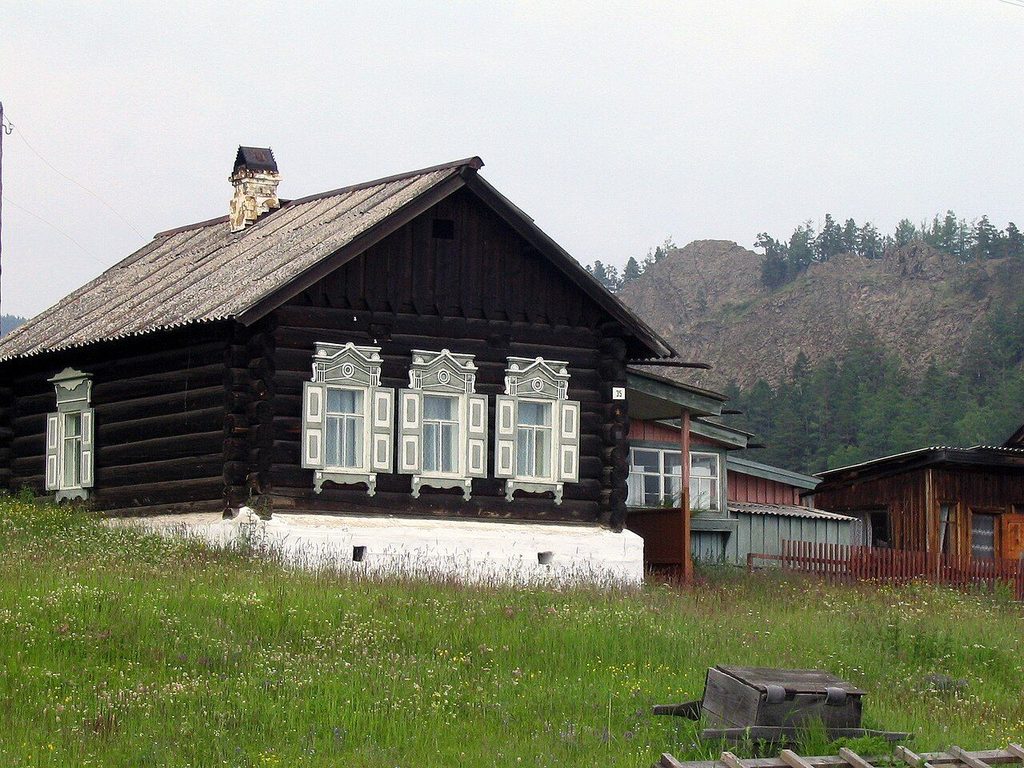 PD, InvictaHOG~commonswiki source
If you stay overnight, walk down to the shore in the evening and early morning, when the water is often calm. Remember that the village is home to people who live there year-round. Keep to paths, close gates and do not photograph people without asking.
Ticks and other hazards
Ticks are the main health risk on this walk in late spring and early summer. In the forests around Baikal, ticks can carry tick-borne encephalitis and other diseases. They are most active from about May into early July, and they wait on grass and low branches beside paths.
- Wear long trousers tucked into socks and long sleeves, preferably in light colours so ticks are easier to see.
- Use a repellent suitable for ticks, and reapply as directed.
- Check yourself, and anyone walking with you, carefully at every rest and again in the evening.
- If you find an attached tick, remove it carefully and seek medical advice. Ask a doctor well before your trip about vaccination.
Other hazards are those of any wild shore. Scree slopes can be loose. Rocks along the water can be slippery. The weather changes quickly, and a calm morning can become a cold, windy afternoon. The water is very cold even in midsummer; do not swim far from shore.
Bears live in the forests of the Baikal region. Encounters near this busy path are uncommon, but keep food sealed, make some noise in thick cover, and do not leave scraps behind.
Beyond Bolshie Koty
The coast continues north beyond the village, but the path becomes harder and less used, and further sections are only for experienced walkers with good preparation. For most people, Bolshie Koty is the natural end point.
Other walks along the southern shore follow the old railway line, described in our note on the Circum-Baikal railway, and shorter paths climb from Listvyanka itself. Our note on Listvyanka covers the village at the start of the path.
When to walk
The path is usually walked from late spring to early autumn. July to September is often the most comfortable time, with ticks less active than in early summer, and long days. September can be very fine, with clear air and the larch turning yellow on the slopes.
In winter, the path is snowy and icy, and some people walk or ski along the frozen shore instead. That route is only safe when the ice is solid and local people confirm it; read our note on Baikal's winter ice first, and never go onto the ice on your own judgement alone.
Whatever the month, tell someone your plan, carry enough water and food, and give yourself plenty of daylight. The walk rewards patience: the slower you go, the more of the shore you see.
- Getting there
- Start at the northern end of Listvyanka
- Bring
- Boots, water, food, tick repellent, long sleeves, layers